Hotel check-in and checkout timing defines the guest experience more than you might realize: get it right and guests arrive relaxed, leave satisfied and remember the stay fondly. But when you get it wrong, no thread count or amount of turndown service will save the experience.
And with guests taking fewer trips than before — Going's 2026 State of Travel report notes that planned international trips have dipped below 2 trips per year for the first time since 2023 — every detail of the stay (including arrival and departure) is under a magnifying glass. These moments are your first and last chance to make an impression. So, here's how to make sure your guests can come and go with ease.
Key Takeaways
Hotel check-in and checkout timing are the arrival and departure windows hotels set to manage room readiness, operations and the guest journey.
Successful check-in and checkout processes reduce lobby wait times and free up your team to keep guests happy.
Being flexible with timing and maintaining constant communication builds trust and prevents post-checkout complaints.
Tools like Canary’s Mobile Check-In and Smart Checkout cut out the paperwork and the lines, making the whole stay feel effortless.
What Is Hotel Check-In Time?
Hotel check-in time is whenever guests can begin arriving and enter their rooms. The average check-in time for hotels is 3 p.m., but it can vary depending on the property. Having a set check-in time gives your housekeeping team the space they need to get rooms ready and helps the front desk handle the afternoon rush without getting buried.
For the front desk, this window is your chance to nail the essentials (like checking IDs, taking payments, answering questions) before the guest even goes upstairs. A solid arrival process stops the lobby from feeling like a crowded waiting room so your staff can focus on being hospitable.
Why Hotel Checkout Time Is Just as Critical as Check-In Time
The average hotel checkout time, when guests are expected to depart their rooms, is usually 11 a.m. While it may seem like a simple administrative detail, checkout time plays a pivotal role in keeping operations predictable, efficient and profitable.
Clear checkout expectations give staff a clear idea of when rooms will free up. This reduces delays, avoids awkward conversations at the front desk and keeps operations running with fewer surprises. Below are the core reasons the checkout process matters just as much as check-in.
Operational Structure and Consistency
A set checkout time keeps the whole day from falling apart. Without it, your team is left guessing, leading to messy handovers and confused guests. With it, you know exactly when guests are heading out and housekeeping can head in.
This is vital when you’re fully booked and need to flip rooms fast. When everyone sticks to the schedule, it means:
No surprise requests: Guests won’t wait until the very last second to ask for an extra hour because they already know the rules.
Cleaning crews and the front desk stay synced: Housekeeping knows which rooms are empty so they aren't wasting time knocking on doors of guests who are still in bed.
Faster room flips: You’ll know exactly when a room is vacant, making it much easier to get it ready for the next person checking in that afternoon.
Room Availability and Revenue Management
When guests linger past their checkout time, it sets off a chain reaction that affects your revenue management. Late departures slow down cleaning and stop you from letting a new guest in early (or selling that room to a last-minute walk-in!).
Knowing exactly when a room will be empty skips the guessing game, literally making room for more revenue opportunities. When you’re sure about your numbers, you can price your rooms more aggressively and offer upgrades with confidence. This leads to:
Real-time sales: You can sell every last room on your site, because you know exactly which ones are vacant or actively being cleaned.
Confident upgrades: You can offer a guest a paid move to a better room because you know for a fact it’s already been turned over.
Zero double-bookings: You won’t accidentally sell a room to a new guest only to find the previous occupant hasn’t left yet.
Guest Experience and Expectation Alignment
Guests hate guessing, so setting expectations is key. A clear checkout time means they don't have to wonder if they have time for one last coffee or if they're about to get hit with a surprise fee.
This is the last thing they’ll remember before they head home. If their final moments at your hotel are easy and stress-free, they’ll leave happy. If it’s a chaotic rush, that’s the story they’ll tell their friends. Setting up expectations from the start means:
No "am I late?" stress: Clear rules let guests plan their morning and pack at their own pace without worrying about a call or knock on the door.
Ending on a high note: A quick, painless exit ensures the good memories from the rest of the stay actually stick.
A chance to win them over: Saying “yes” to an extra hour when you've got the space is the easiest way to turn a guest into a regular.
Staffing Efficiency and Workflow Planning
When departures are all over the place, your staff might be idle in the morning, only to get swamped in the afternoon. This matters more than ever, given the current staffing climate: According to a January 2025 survey by the American Hotel & Lodging Association, 65% of hotels still report staffing shortages, with housekeeping and front desk cited as the most critical gaps.
A firm checkout time sets staff members up for predictable shifts and makes sure they’re assigned to when and where they’re needed most. It turns the workday into a manageable plan instead of a series of fires to put out by allowing for:
Smart cleaning rounds: Housekeepers aren't wandering hallways waiting for a "do not disturb" sign to flip; they know exactly when to head into a room and get to work.
Better desk backup: You can pull extra help to the front desk right as the lobby gets busy rather than guessing when the rush will hit.
Fairer shifts: You won't have one team drowning in work because of late departures while the next shift walks into a quiet building with nothing to do.
Data Synchronization and Automation Readiness
Checkout time also affects digital operations, especially as more hotels rely on hotel automation to streamline workflows. Systems that handle billing, key management, room status and guest communications all depend on accurate departure timestamps.
When checkout timing is predictable, automation runs smoothly and reduces manual work for staff because:
Keys stop working when they’re supposed to: You won’t have guests accidentally letting themselves back into a room that’s already been assigned to someone else.
There are no manual billing fixes: The system can close out a guest's tab and send a receipt automatically, so your front desk doesn't have to spend their morning fixing mistakes.
Housekeeping gets "Ready to Clean" alerts: Instead of your team calling back and forth to see if a guest is gone, the software tells housekeeping the second a room is vacant so they can get moving.
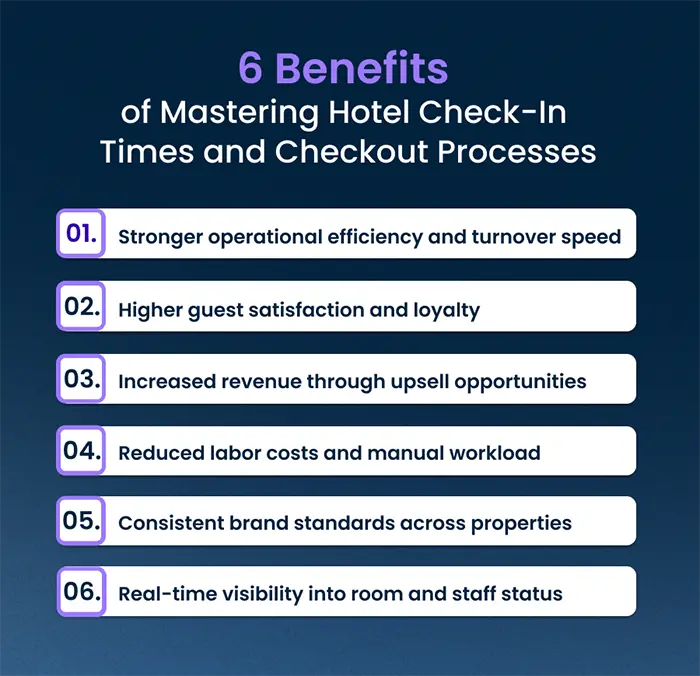
6 Benefits of Mastering Hotel Check-In Times and Checkout Processes
Most people think of check-in and checkout as the bookends of a stay — but they’re actually the gears that keep your hotel turning.
Here are six benefits of mastering hotel check-in and checkout processes.
1. Sharper Operations and Faster Flips
When you communicate check-in and checkout times, your cleaning crew knows exactly when they can enter a room. Everyone knows their role, the lobby stays clear of antsy crowds and rooms get turned over fast enough to welcome the next wave of guests right on time.
This rhythm is a lifesaver when you’re fully booked and need to get rooms ready without making the next arrival wait in the lobby for hours.
2. Happy Guests Who Actually Come Back
Traveling is exhausting, and the last thing a guest wants is a confusing arrival or a rushed exit. By making the rules clear from the start, you take the guesswork out of their morning.
A painless departure ensures the last thing they remember is how easy staying with you was, not how long they stood in line to drop off a key. It’s the simplest way to cut down on complaints, earn those five-star reviews and see repeat guests.
3. More Ways to Grow Your Bottom Line
If your team isn’t buried under a mountain of paperwork or long lines, they have time to offer guests a late checkout or a room upgrade — things that take a stay from “good” to “great.”
Dynamic upsell tools can help on this front, too. Automated upsell prompts reach guests at the right time, even before arrival. This turns dead time into extra profit and makes the most of every room — without adding a single task to your front desk’s plate.
4. Happier Staff and Lower Labor Costs
Predicting when travelers will check out means you can staff up for the rush and scale back when it’s quiet. It stops that frantic mid-day scramble where everyone is working overtime just to catch up.
When the workday follows a plan, your team stays fresh, burnout drops and you stop paying for unnecessary extra hours because the workload is spread out fairly across the shift.
5. A Professional Standard Across Every Property
Guests love knowing exactly what to expect, especially if they stay loyal to your brand across different cities. Keeping your timing and rules the same everywhere builds trust that keeps people coming back.
It also makes training a breeze — once a staff member learns the system at one location, they’re ready to hit the ground running at any of them without a steep learning curve.
6. A Real-Time Map of Your Entire Hotel
It’s hard to run a hotel if you’re flying blind. When your check-ins and checkouts are organized, your dashboard shows the up-to-the-minute truth: which rooms are empty, which are being cleaned and who is still in bed.
This keeps your front desk and housekeeping perfectly in sync, so you never accidentally send a new guest into a room that hasn't been touched by a housekeeper.
How Average Check-In Time for Hotels Is Determined
The average hotel check-in time may be 3 p.m., but the right check-in time depends on your property.
Setting a check-in time is a balancing act between when guests physically arrive and how fast your team can get rooms ready. Here’s how check-in time is typically established:
The Cleaning Crew: Your check-in time depends primarily on how long it takes to flip a room. If you have a smaller crew or complex suites, a later window gives housekeeping time to make every room perfect before the next guest walks in.
Who’s On Deck: You want your biggest team on the floor when the lobby gets busy. Hotels align their check-in times with peak staffing hours so someone is always available to grab a bag, verify an ID or handle a special request.
Arrival Patterns: Most guests follow similar travel patterns, like arriving at the airport or finishing meetings around the same time. Matching your check-in window to these common arrival hours is convenient for guests and more manageable for your staff.
Full-House Pressure: When every bed is sold, the margin for error disappears. High occupancy means you need every minute of that turnover window to get the building ready, making a firm, consistent schedule the only way to avoid a logjam in the lobby.
Tech and Real-Time Tracking: Digital dashboards take the guesswork out of room status. Instead of waiting for a phone call from housekeeping, the front desk can see at a glance when a room is vacant and clean.
Checking Out Late at Hotels: Key Considerations and Business Opportunities
Late checkout is a massive operational lever and a hidden revenue stream. When you get the timing right, you turn a potential housekeeping headache into a win for your bottom line.
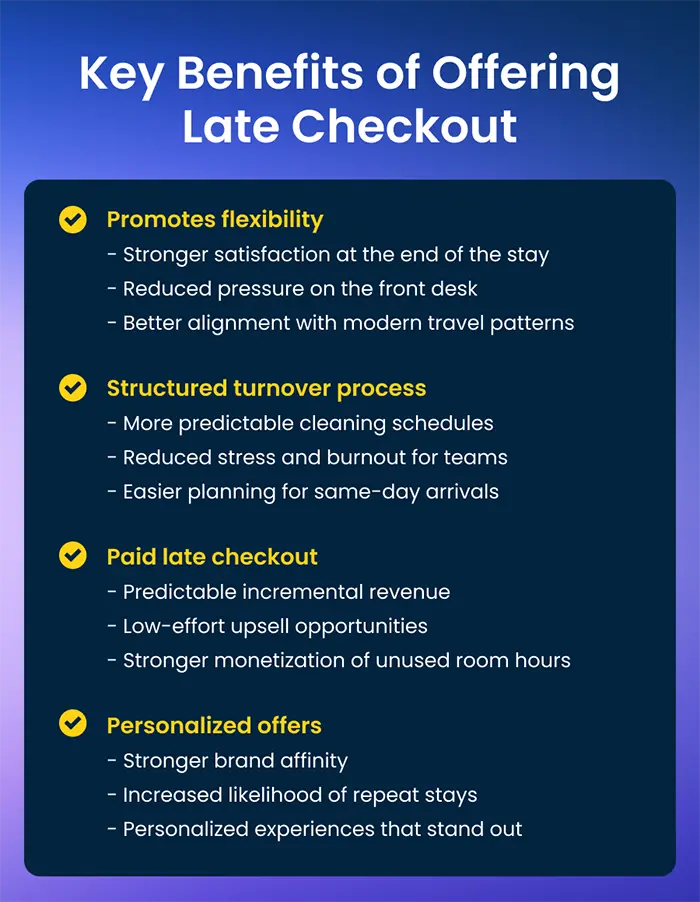
Late Checkout
Key Benefits
Promotes flexibility
- Stronger satisfaction at the end of the stay
- Reduced pressure on the front desk
- Better alignment with modern travel patterns
Structured turnover process
- More predictable cleaning schedules
- Reduced stress and burnout for teams
- Easier planning for same-day arrivals
- Stronger brand affinity
- Increased likelihood of repeat stays
- Personalized experiences that stand out
Giving Guests the Control They Want
Travelers aren't robots with 11 a.m. expiration dates. Between delayed flights, remote meetings and family chaos, guests often need that extra hour or two (and they’ll remember who gave it to them!).
Using Guest Management Software like Canary to handle these requests digitally means your front desk doesn't have to spend the morning explaining the same rules over the phone. It keeps the lobby quiet and lets guests manage their own departure without the stress of check-out lines.
In fact, self-service is becoming the preferred way to check out. According to the 2025 State of Hotel Guest Tech Report, nearly half of all hotel guests now prefer to check out via their smartphone rather than visiting the front desk. And the demand is even higher for luxury hotels — 43% of luxury travelers specifically said they expect not to wait in any queue at all during their stay.
Protecting Your Housekeeping Team
Housekeeping is a tough job on any day, but it’s made even harder by surprise "Do Not Disturb" signs at noon. A managed late-checkout system stops your crew from spinning their wheels or wandering hallways looking for rooms to clear.
A solid plan lets you balance the workload, reducing the burnout that leads to high staff turnover. It’s about keeping the team happy so they can keep the rooms spotless for the next arrival. Tools designed for hotel staff retention create more balanced workloads and improve day-to-day efficiency by providing:
More predictable cleaning schedules
Reduced stress and burnout for housekeeping teams
Easier planning for same-day arrivals
Turning "Dead Time" into Real Profit
Why give away for free what people are already willing to pay for? A guest with a 6 p.m. flight will likely pay for a few extra hours of AC and a place to park their bags.
By automating these offers, you’re monetizing a room that would otherwise sit empty. It’s one of the easiest ways to drive extra revenue because the guest already sees the value. Offering late checkout provides:
Predictable incremental revenue
Low-effort upsell opportunities
Stronger monetization of unused room hours
Building a Fanbase, Not Just a Guest List
If you want to turn a one-timer into a regular, treat them like a VIP as they head out the door. Offering a late checkout to a loyalty member or a frequent traveler proves you’re paying attention to their needs.
This kind of personalized service builds a real emotional connection to your brand, making it much more likely they’ll skip the travel sites and book directly with you next time. For deeper insights on cultivating repeat business through personalization, explore our guide on hotel loyalty program tips.
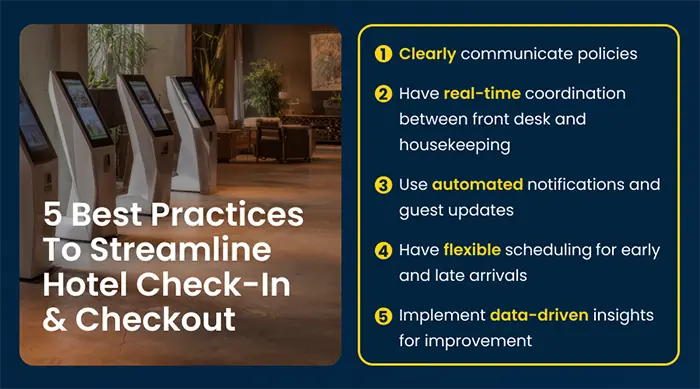
5 Best Practices for Managing Hotel Check-In Times and Streamlining Checkout
Getting your check-in and checkout process right is about taking the stress out of the guest’s day and the guesswork out of your staff's shifts.
1. Be Loud and Clear About Your Policies
Don’t make guests hunt for your checkout time. When people know exactly when to show up and when to head out, they feel in control — and your front desk won't have to answer the same three questions all day long!
AI guest messaging is a lifesaver here. Think of it as an automated concierge that handles the boring stuff. When a guest texts, “What time do I have to leave?” or “Can I get in early?”, the AI recognizes the question and sends an instant, accurate reply. It handles the back-and-forth without your staff ever having to touch a keyboard or phone receiver.
Put your times everywhere: Include them in every confirmation email and pre-arrival text.
Send a day-of reminder: A quick text on the morning of arrival or departure clears up any lingering confusion.
Stay consistent: Make sure the time listed on your website matches your emails and your in-room signs.
2. Get the Front Desk and Housekeeping on the Same Page
A smooth arrival starts with a team that communicates seamlessly. Streamlined hospitality operations look like the front desk seeing the exact moment a room is cleaned and checking guests in quickly instead of making them wait in the lobby while someone goes to check on the room’s status.
Use a live dashboard: Give both teams access to real-time room statuses so they stay in sync.
Kill the manual updates: Stop the constant phone calls and radio chatter asking if Room 302 is ready yet.
Plan around the now: Use live data to decide which rooms housekeeping should tackle first.
3. Let Automation Handle the Busy Work
Automated alerts and simplified hotel communications remove uncertainty from the guest experience. Sending a quick ping when a room is ready, or a reminder on how to drop off the key keeps things moving without your team having to lift a finger.
The welcome ping: Send an automated text confirming their room and check-in time before they land.
The “Room Ready” alert: Let guests know the second their room is vacant and cleaned so they can head straight up.
The digital checkout info: Send the final bill and departure instructions automatically so guests can skip the front desk and depart.
4. Build in Some Breathing Room for Early and Late Requests
Travel is unpredictable, and guests appreciate it when you can roll with the punches. Letting people request a little extra time through contactless check-in makes you look like a hero — without throwing your operations into a tailspin.
Digitize upsells: Offer early check-in or late checkout as a paid option through your upsells solution.
Break up the crowd: Giving people the option to leave later helps thin out the 11 a.m. lobby rush.
Stay in the driver's seat: Use a digital system to approve or deny requests based on what your cleaning schedule looks like on a day to day basis.
5. Use Your Data to Stop Playing Guessing Games
You can't improve what you aren't tracking. Looking at your actual numbers helps you spot the exact moments where things start to bottleneck so you can fix them before the next busy weekend.
Watch the clock: Track how long it actually takes to get a guest checked in during peak hours.
Find your rush hour: Identify the specific windows when the lobby gets slammed and staff up accordingly.
Fine-tune your rules: If the data shows you're always ready two hours early, maybe it's time to officially move your check-in time up.
Improve Guest Experience with Check-In and Check-Out Solutions from Canary
Nobody travels just to stand in a lobby filling out forms. Canary moves the tedious parts of guest arrivals and final departure to the guest's phone, so they can skip the lines and get straight to their stay.
By automating the paperwork and keeping your team updated in real-time, you free up your staff to actually host instead of just processing data. It makes the entire trip feel effortless for the guest and much easier for your crew to manage. Core features include:
Mobile check-in with ID verification and secure payment
Smart checkout with automated billing and digital folios
Room status updates
Automated communication for arrivals, upgrades and departures
Integrated fraud prevention and payment security
Book a demo today and see how Canary can help your hotel manage and optimize hotel check-in and checkout timing processes.