It’s every hotel manager’s nightmare: Tables are set, but the restaurant line is out the door. The front desk is overstaffed, but the rooms aren't turned. When schedule timing is off, hospitality stumbles — and this can be the silent thief of your profit margins and guest experience.
We know you feel the squeeze between ongoing labor shortages, rising wages and growing guest expectations. Finding the perfect balance can feel like a high-stakes guessing game — but it doesn't have to be a gamble. Here’s how smart workforce management transforms your operations without burning out the team that keeps your lights on.
Key highlights:
Hotel workforce management is the strategic planning and scheduling of hotel staff to control labor costs while maintaining high service standards.
Effective workforce management matches staffing levels with occupancy forecasts, seasonal demand and real-time operational data.
Hotels should combine scheduling software, performance metrics and automation to reduce admin work and increase employee productivity.
Canary Technologies supports your team to reduce front desk strain and free staff to focus on high-value guest interactions.
What Is Workforce Management for Hospitality?
Workforce management is a strategy that controls costs while maintaining high standards by forecasting labor needs, scheduling employees, tracking time and attendance and analyzing productivity. It ensures that the right number of employees with the right skills are working at the right time (especially as your needs change throughout the day or from season to season). Well-executed workforce management reduces unnecessary labor expenses, improves efficiency and supports stronger employee engagement.
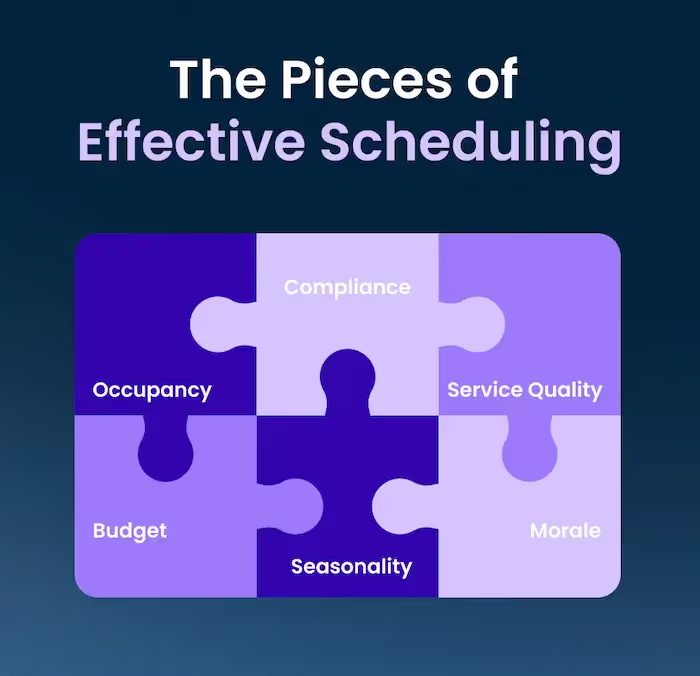
The puzzle of effective scheduling consists of many factors: your hotel is open 24/7, demand for rooms and amenities fluctuates daily, staff availability changes and total working hours may be restricted by laws. Every move is a staffing decision that directly affects revenue and guest satisfaction. Your playbook is effective workforce management — the strategy that aligns your staffing with real-time demand, turns cross-training into a competitive advantage and automates the tasks that keep your team from truly connecting with guests.
If you’re looking for a deeper dive into practical strategies, explore our guide to managing hotel staff, which outlines actionable ways to build a more productive, resilient team.
Why Hotel Labor Management Is Critical for Hotels
The 2025 Hotel Labor Costs and Trend Report paints a complex picture: headcount, labor and cost per occupied room grew, but so did labor efficiency and productivity. Results like these don’t happen by chance; they are the hard-won gains of an industry forced to do more with less, powered by technology that finally turned “efficiency” from a buzzword into a baseline.
The complexity of why this matters expands when you consider how to retain top talent (because hiring is pricey) while employee expectations continue to shift. Teams want predictable schedules, manageable workloads and meaningful recognition. A thoughtful approach to hotel staff retention should reduce turnover, strengthen morale and protect the guest experience.
Aligning Staffing With Guest Expectations
Smart labor management means that you consistently meet rising guest expectations, boost guest satisfaction and protect your online reputation. In 2026, guests are looking for the why and purpose in their stay, according to Hilton — it’s up to your hotel to provide the answers. Whether guests choose you for the fastest service, most seamless digital interactions or highly personalized attention, your staffing levels equip you to deliver on your hotel’s promise.
This begins with matching schedules to occupancy forecasts and peak service windows. If you know check-in traffic spikes between 3 and 6 p.m., your front desk coverage must meet that demand.
To align service with guest expectations, consider:
Matching front desk staffing to check-in and checkout peaks
Adjusting housekeeping shifts based on arrival and departure reports
Monitoring response times for guest messaging and service requests
Using point-of-sale reports of F&B outlets for historically comparable days to plan
Adopting a mobile check-in form to collect planned arrival times
Addressing Rising Hotel Labor Costs
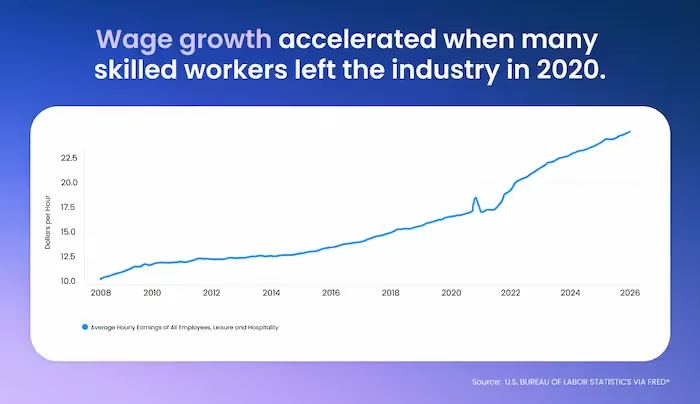
Labor is one of the largest line items on your profit and loss statement. As wages continue to climb, overtime can add up quickly and erode margins. You need disciplined labor oversight to prevent payroll expenses from outpacing revenue growth.
To manage your hotel’s labor effectively, you need to track it in a way that’s meaningful to you, such as a percentage of revenue. Monitor overtime weekly and use forecasting data to avoid last-minute staffing adjustments. This type of financial discipline plays a central role in controlling overall hotel operating costs while maintaining service standards.
To manage labor costs more effectively:
Track labor cost per occupied room daily
Limit overtime through proactive scheduling
Cross-train employees to reduce excess headcount
Automate repetitive administrative tasks to reduce manual workload
Improving Retention and Employee Satisfaction
High turnover destabilizes operations and increases recruitment and training expenses. When employees feel overworked or underappreciated, they leave. That cycle creates service inconsistencies and puts more pressure on the remaining staff while you spend time interviewing and retraining.
Recognition, from regular words of appreciation to occasional awards, improves morale and long-term retention. But on its own, it only scratches the surface. Recognition needs to be layered on top of predictable schedules, reasonable workloads and opportunities to earn more direct influence or responsibility.
Here are ways to put that into practice:
Build schedules that minimize last-minute shift changes
Distribute workloads evenly across peers
Recognize high performers
Implement Digital Tipping to increase take-home pay and employee satisfaction
Ensuring Compliance with Labor Regulations
Labor laws may not be part of your day-to-day priorities, but noncompliance can harm your bottom line and your employer brand. That’s why it’s important to know the rules and maintain accurate time tracking, document staff schedules and monitor overtime thresholds.
In practice, this also means regularly checking that policies align with any updates to federal, state or local regulations. This operational integrity becomes one of many reasons talent will choose to work and stay with you.
To stay compliant and reduce risk:
Maintain accurate digital timekeeping records
Monitor overtime thresholds proactively
Review local, state and federal labor law updates often
Train managers on compliance standards and documentation
Key Components of Effective Hotel Labor Management
Effective hotel labor management is about juggling several components. Drop one element and inefficiencies ripple across departments.
The table below outlines the core components and how they together shape a modern hotel operation.
Hotel Labor Management Components
How These Components Work
Labor Forecasting
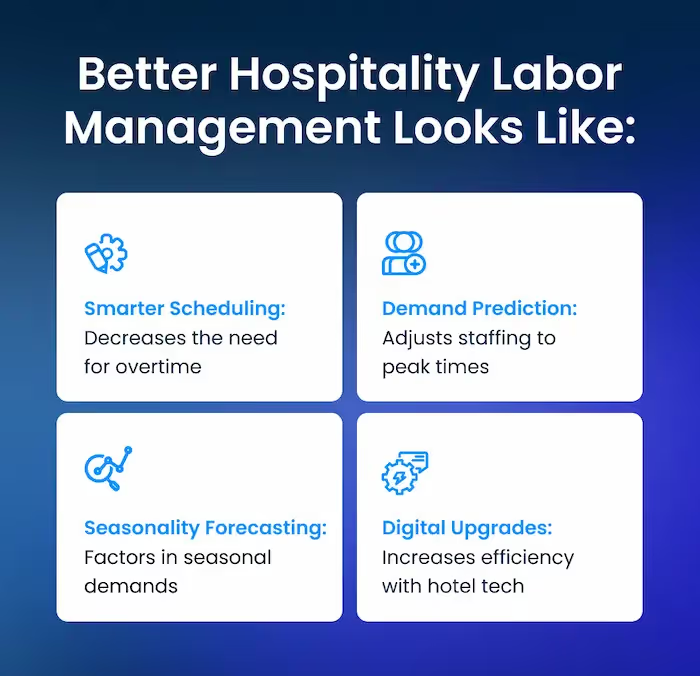
This crucial review uses occupancy, events and historical data for comparable dates and seasonal trends to predict staffing needs. Accurate forecasting prevents teams from being overstaffed or overwhelmed while keeping labor costs at an effective rate relative to revenue performance.
Employee Scheduling
The process of matching individual staff availability with shifts and labor forecasts. Smart scheduling reduces overtime, prevents understaffing and balances workloads to protect both service standards and employee morale.
Compliance Tracking
Monitors overtime thresholds, break requirements and wage regulations across jurisdictions. Digital timekeeping and documentation reduce legal risk, prevent penalties and keep you in compliance.
Payroll & System Integration
Forecasting, scheduling and compliance tracking converge into a single, automated workflow. By linking time tracking directly to payroll, you eliminate the friction of manual entry, improving accuracy, streamlining admin tasks and providing a clear view of labor expenses.
Real-Time Reporting
Delivers up-to-date insights into on-site staff, productivity metrics and overtime percentages. Managers use real-time dashboards to adjust staffing and avoid costly inefficiencies.
7 Workforce Optimization Strategies That Drive ROI
Because labor is a controllable expense, it’s also an opportunity to improve your margin. Importantly, this is when productivity and protecting service quality take center stage.
The following seven strategies help you create measurable ROI through workforce optimization.
1. Forecast Labor Needs Using Occupancy and Demand Data
We already covered the vital component of labor forecasting. The key here is accuracy to avoid last-minute adjustments and unnecessary overtime.
In practice, forecasts might change with new reservations on the books or an unusually warm spring weekend that draws outside guests to your large patio. When conditions change quickly, someone has to notice and act.
To make forecasting actionable, focus on:
Analyzing historical occupancy by day of week and season as a baseline
Reviewing forward booking pace weekly
Checking daily for staffing adjustments for the next 3 days vs forecast
2. Cross-Train Hotel Staff to Maximize Flexibility
When employees understand multiple roles, managers can shift coverage quickly during unexpected demand spikes (such as group arrivals or a late lunch rush) without increasing headcount.
This flexibility can improve service, increase productivity and strengthen career development, according to Harvard Business Review. A proactive focus on training hotel staff can make your team nimble when you need them to be and ready for a promotion when the time comes.
To implement cross-training effectively:
Identify complementary roles across departments
Create structured training plans and dedicated training hours
Rotate team members through secondary responsibilities to keep skills fresh
3. Automate Scheduling to Save Time and Reduce Errors
If you're running a large-scale operation or dealing with seasonal employees, using a spreadsheet for scheduling is more likely to cause hassle than harmony.
Use automated scheduling tools to streamline shift planning, flag overtime risks and ensure compliance with labor regulations. Managers who spend less time performing manual checks can spend more time leading their teams.
To strengthen scheduling accuracy:
Implement a digital scheduling platform
Set overtime alerts and compliance safeguards to notify you as needed
Allow employees to view schedules and swap shifts digitally, notifying you for approval
4. Use Analytics to Identify and Eliminate Inefficiencies
Data reveals hidden inefficiencies that otherwise go unnoticed on an average day. Key revenue metrics can identify patterns such as a spike in labor cost relative to revenue or changes in productivity.
Consistently reviewing this data is a proactive way to optimize the workforce rather than just responding to issues after the fact. Small inefficiencies identified early can prevent larger financial impacts later.
To leverage analytics effectively:
Track labor cost per occupied room (CPOR) or labor cost as a percentage of gross revenue
Compare labor spend to similar dates, identifying what changes drove positive impact
Review departmental productivity monthly
5. Monitor Key Labor KPIs to Guide Decision-Making
Without clear KPIs, labor management is guesswork. Defined metrics and goals keep managers accountable and create transparency across departments.
KPIs are early warning signals when labor costs trend upward or productivity declines. Clear goals and thresholds that prompt action can turn your optimization efforts into measurable financial results.
Key labor KPIs to track include:
Overtime as a percentage of total payroll
Average response time to guest requests
Employee turnover rate
6. Improve Employee Retention Through Fair Scheduling Practices
The only way to retain talent is by prioritizing your employees’ well-being. Think about it: Would your highest-performing team member rather be called in on short notice repeatedly (contributing to their burnout) or join a friend to work at a nearby hotel where schedules are more predictable?
When employees feel respected and supported, performance improves and turnover declines. You may even find it easier to attract talent to your open roles.
To create fair scheduling practices:
Publish schedules well in advance
Distribute weekend and holiday shifts evenly
Monitor workload balance across team members
7. Align Labor Planning With Guest Experience Goals
If your brand promises seamless digital check-in, fast service and personalized communication, both staffing and technology must reflect that commitment.
When you align labor with your service goals, every guest receives the service you promised to them. And thanks to modern tools, your team gets help behind the scenes. By investing in strong operations management and guest management systems, you can create the consistent, scalable and personalized experiences your guests crave.
To connect labor planning and tools with guest satisfaction:
Implement digital tools that reduce front desk workload, such as AI guest messaging
Monitor guest feedback tied to staffing levels
Use tools such as AI Voice to never miss a phone call
How to Leverage Hotel Workforce Management Software
Hotel operations software can consolidate the many aspects of planning, including scheduling, time tracking, labor forecasting, compliance monitoring and reporting, into one integrated system. Hotels use this type of software to reduce the manual workload spent aligning staffing levels with a constantly changing environment.
A truly integrated system moves you from reactive to proactive, serving as a strategic compass for your daily operations. Through real-time notifications and intelligent alerts, the software breaks down complex data into actionable priorities, steering your focus exactly where it’s needed at the moment it matters most.
Hotels use workforce management software to automate tasks such as:
Building data-driven schedules aligned with occupancy forecasts
Tracking labor costs as a percentage of revenue in real time
Monitoring overtime and compliance thresholds proactively
Analyzing productivity metrics by department or role
Enhancing Software Solutions with Advanced AI Automation
While traditional workforce management software improves visibility and reduces manual workload, advanced AI automation improves individual productivity and performance. By layering artificial intelligence on top of existing systems, decision-making becomes easier with tailored options to choose from and suggested paths of action.
AI-powered automations are uniquely good at analyzing historical patterns. In hospitality, that means things such as booking trends and real-time operational data. Not only that, but the AI can also make recommendations and alert decision makers to new developments.
Specialized providers of hospitality AI, such as Canary Technologies, offer dedicated tools to create custom guest journeys and achieve guest-experience scores.
AI-powered tools enhance your workforce strategy by:
Increasing productivity by automating repetitive tasks
Surfacing real-time insights when needed, without manual prompts
Streamlining guest communication across channels
Reducing administrative workload so managers can focus on leadership
Advanced Labor Management for Hotels: Moving Beyond Scheduling
Since staffing decisions are directly tied to financial performance, operational efficiency and guest experiences, agility has to be the name of the game. You’ve got to move quickly and smartly on the information you have. If the weekly schedule is your starting point for managing your staff, you’re already behind on strategic labor management.
Here are some advanced labor management strategies that can jump-start how you address next week’s schedule:
Leveraging predictive analytics: Predictive analytics models what might happen on the road ahead, including staffing levels or fluctuating demand. It gives your team the opportunity to try something new based on likely scenarios
Correcting labor costs in real time: Monitoring labor cost per occupied room and overtime percentages daily sounds good until it’s on your calendar at the same time every day and you ignore the reminder. Use real-time visibility and alert thresholds to focus where and when you need to act.
Integrating with PMS and BI systems: Connected systems are finally becoming the norm. By connecting your workforce management tool with your PMS and hotel business intelligence software, you can unlock new dashboards that reveal how labor performance impacts revenue, guest satisfaction and operational efficiency.
Benchmarking property performance: Look at how your departments’ productivity, labor ratios and cost metrics compare across properties or against industry standards. Benchmarking identifies opportunities for improvement and drives accountability.
The Financial Impact of Better Hospitality Labor Management
There are many reasons that may have brought you to this post, from service concerns to skyrocketing costs and compliance issues — all of which have an impact on your bottom line. Many properties struggle to clearly measure the return on their investment when it comes to managing teams, making it easy to miss inefficiencies like overtime hours, inconsistent hotel employee scheduling and underutilized shifts.
When every stand-up review of performance metrics includes insights on labor management from all angles, teams gain confidence that they are adequately staffed, overtime inefficiencies bubble to the surface and targets turn into achieved goals. Here are actions you can take now to drive measurable ROI.
Reduce Overtime Costs Through Smarter Scheduling
Overtime happens. But when it’s a regular occurrence, it’s a symptom of inadequate workforce planning and one of the fastest ways labor costs spiral out of control.
Keep in mind that the root cause may not even be the schedule. For example, a property that consistently accrues overtime in housekeeping must identify whether minutes per room has increased or if checkouts picked up after the schedule was last reviewed. Even if you end up scheduling more hours, those will cost less than overtime, and any reduction in overtime costs can translate into thousands of dollars saved annually.
Boost Profit Margins With Optimized Labor Allocation
A day of perfectly optimized labor allocation means that staffing aligns precisely with demand patterns and guests are happy. It’s when high productivity meets minimal idle time, and high service standards are achieved without overstretching your team. The goal is for payroll costs to grow in proportion to revenue rather than outpacing it.
Adjusting front desk staffing to peak check-in windows is one way to achieve this, even if it means cross-training staff to shift into other roles. Consider scheduling cross-trained team members on days projected to require high flexibility, and rotating team members to gain experience on more predictable days. Over time, these incremental improvements strengthen overall hotel profit margins.
Improve Forecast Accuracy to Control Spending
Accurate forecasts are like hitting the jackpot when it comes to controlling spend (and unlike the lottery, the odds are in your favor here). When occupancy projections, group bookings and seasonal demand trends are factored into scheduling decisions as soon as the information is available, you avoid surprises.
Consider a hotel that looks at occupancy and daily checkouts, as well as restaurant guests and foot traffic to its amenities. By integrating factors specific to their properties, hotels can improve forecast accuracy and gain greater control over their staffing plans. Forecast accuracy transforms labor from a runaway expense into a controlled investment.
Enhance Guest Satisfaction While Lowering Costs
It’s a common misconception that having fewer team members must lead to reduced service. In reality, the most efficient hotels are those that use technology to handle the transactional so their people can focus on the exceptional.
Modern guests demand digital autonomy and hotels can benefit from it. Hilton’s 2026 Trends Report shows that 73% of travelers are more likely to choose a hotel that offers self-service technology like mobile check-in, and 27% communicate with hotels more than they used to (preferring tech for ease and quick responses). By moving these routine tasks to the guest's smartphone, you meet an expectation and strategically reduce the workload on your front desk.
Reduce Hotel Labor Costs with Smarter Workforce Management from Canary
Workforce management for hospitality becomes far more powerful when your technology actively reduces manual work instead of adding to it. Canary Technologies strengthens hotel teams by automating repetitive processes, minimizing front desk delays and giving hoteliers the tools they need to operate efficiently. By modernizing the guest journey from post-booking through checkout, Canary helps you streamline hotel operations while promoting service quality and controlling payroll expenses.
With Canary’s end-to-end Guest Management Platform, you both reduce labor strain and grow your guest experience. Key benefits include:
Mobile Check-In: Eliminate paper registration cards and reduce front desk lines, freeing staff to focus on individual guest interactions.
Smart Checkout: Shorten checkout times and decrease peak-hour pressure by allowing guests to depart seamlessly from their mobile devices.
Guest Messaging: Centralize communication across channels, reduce phone volume and respond faster without increasing headcount.
Dynamic Upsells: Generate incremental revenue automatically without requiring staff to manually promote add-ons at the desk.
Digital Tipping: Boost staff morale and earnings in a transparent way, improving retention while strengthening service culture.
Canary AI: Automate routine guest inquiries and workflows, reducing repetitive administrative tasks and allowing managers to focus on leadership.
Book a demo today and see how AI-powered tools from Canary help streamline hotel workforce management.
Frequently Asked Questions
How can better hotel labor management increase staff performance and productivity?
Better hotel labor management gives your team clarity, consistency and the tools they need to perform at a higher level. When staff schedules align with real demand, employees avoid burnout during peak times and underutilization during slower periods. This balance leads to more focused, engaged employees who deliver better guest service.
It also removes friction from daily operations. When staff know exactly where to be and what to prioritize, they spend less time reacting and more time delivering great experiences. That translates directly into faster service, higher guest satisfaction and stronger team morale.
Key ways labor management improves performance:
Align staffing levels with real-time demand
Reduce employee burnout and scheduling conflicts
Improve accountability with clear roles and expectations
Free up managers to focus on coaching instead of coordination
What are some easy tips for hotel staff management?
Strong hotel staff management doesn’t require a complete overhaul — small, consistent improvements drive meaningful results. The most effective teams focus on communication, clarity and consistency across every shift.
Start by simplifying processes and giving staff the tools to succeed. When employees understand expectations and have easy access to information, they make faster decisions and deliver better service without constant oversight.
Easy ways to improve staff management:
Set clear expectations for each role and shift
Use digital tools to streamline communication
Recognize and reward strong performance regularly
Standardize processes to reduce confusion
Gather staff feedback and act on it quickly
How can we manage our hotel staff better during busy seasons?
Busy seasons expose gaps in staffing, communication and operations. The key to managing hotel staff during peak demand is preparation — not reaction. Hotels that plan ahead with flexible scheduling and clear workflows handle surges more smoothly and maintain service quality.
You also need to empower your team to move faster without sacrificing consistency. That means reducing manual tasks, automating repetitive processes and ensuring staff can focus on guest-facing interactions when it matters most.
Best practices for peak season staffing:
Forecast demand early and adjust schedules proactively
Cross-train staff to handle multiple roles
Use automation to reduce front desk workload
Increase communication across departments
Build in buffer staffing for unexpected spikes
How does workforce management reduce hotel labor costs?
Workforce management reduces labor costs by aligning staffing levels with actual demand instead of relying on static schedules. When you staff based on real occupancy, arrivals and service needs, you eliminate overstaffing during slow periods and avoid costly last-minute overtime.
It also improves efficiency across your team. With better scheduling and task allocation, each employee contributes more value per shift, allowing you to operate with leaner teams without compromising service quality.
Ways workforce management lowers costs:
Reduce overstaffing and unnecessary labor hours
Minimize overtime and last-minute scheduling changes
Improve productivity per employee
Identify inefficiencies through performance tracking
Automate administrative tasks to save manager time
How can data analytics improve hotel staff scheduling?
Data analytics transforms your hotel staff schedule from guesswork into a strategic advantage. Instead of relying on historical averages alone, hotels can use real-time and predictive data — like occupancy rates, booking pace and guest behavior — to build more accurate schedules.
This leads to smarter decisions and more agile operations. Managers can adjust staffing levels quickly based on demand shifts, ensuring the right number of employees are scheduled at the right times.
How analytics improves scheduling:
Forecast demand using real-time and historical data
Optimize shift coverage based on peak service times
Identify trends in labor performance and efficiency
Adjust schedules dynamically as conditions change
Reduce scheduling errors and manual planning time
How long does it take to implement hotel workforce management software?
Implementation timelines for hotel workforce management software vary depending on the size of the property and system complexity, but modern cloud-based solutions are designed to deploy quickly. Many hotels can get up and running in a matter of weeks, not months.
The fastest implementations happen when platforms are intuitive and require minimal training. With the right solution, teams start seeing value almost immediately — from improved scheduling to reduced administrative workload.
Typical implementation factors:
Property size and number of staff
Integration with existing systems (e.g., PMS)
Level of customization required
Staff training and onboarding time
Most hotels begin seeing measurable improvements in efficiency, labor costs and staff performance shortly after rollout.







.avif)